

On November 1, we celebrated our 45th Anniversary of Independence. On November 1-4, we also made history as the smallest country ever to host the Commonwealth Heads of Government Meeting (CHOGM)! In recognition of these two milestones, we look inwards at some of our pioneering moments, institutions, and infrastructure that helped shape the character of our nation.
Resistance and Rebellion
Late 17th century (c. 1680s) – Maroon Community in the Shekerley Mountains
By the late seventeenth century, groups of formerly enslaved Africans who had escaped enslavement were living in the Shekerley Mountains of Antigua. Beyond the immediate reach of plantation authorities, these Maroons cultivated small plots and resisted the system of slavery. Their presence represents an early and determined pursuit of freedom.
The 1736 Conspiracy
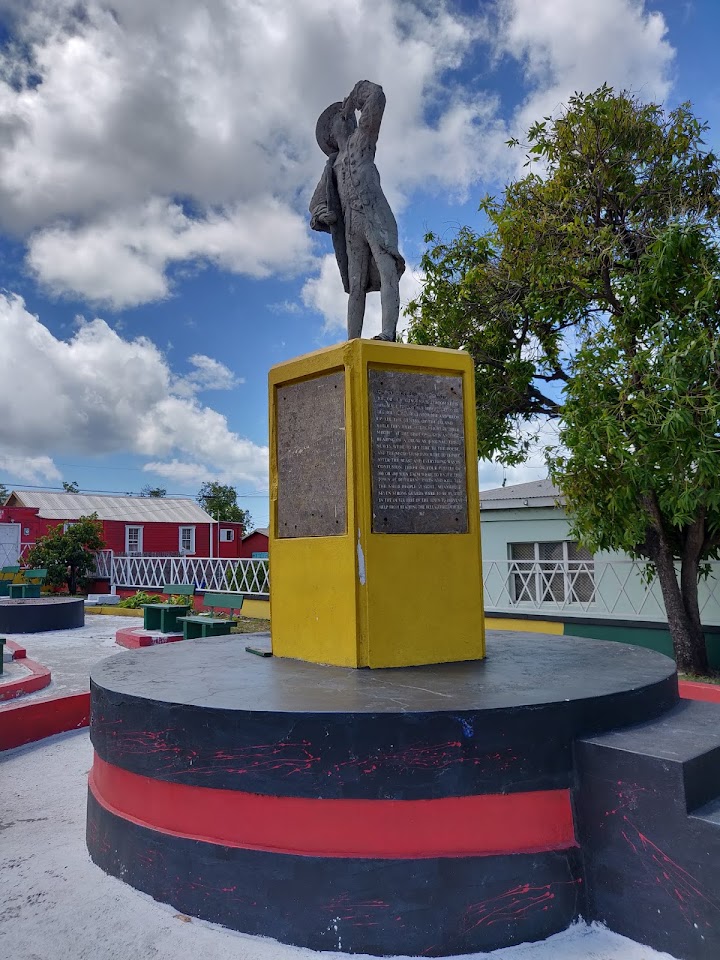
Enslaved Africans in Antigua led by Court, also remembered as Prince Klaas/King Court/Tackey, planned an October 1736 island-wide uprising against slavery and British colonial rule. The plot was uncovered before it could be carried out, and 88 men were executed. Had the plot succeeded, it would have preceded theHaitian Revolution in 1791, by 55 years.
Prince Klaas Monument (Independence Avenue)
Education and Institutions
Mico School – 1838
The Mico Normal School opened in St John’s in 1838 to train teachers. Its work helped build a foundation for formal teacher education in Antigua and the wider Leeward Islands, drawing trainees from other Caribbean territories.
Grammar School – 1884
Antigua Grammar School opened in a house in St John’s on 16 April 1884, with eleven boys under its first headmaster, the Reverend Samuel Edmund Branch. From that small beginning, it grew into one of the Caribbean’s best-known secondary schools, attracting students from across the region.
Antigua Girls High School – 1886
Founded in 1886, Antigua Girls’ High School widened access to secondary education for girls. At a time when such opportunities were limited, the school created opportunities for young women to pursue further education.
Antigua State College – 1977
Antigua State College was established in 1977 through the merger of the Leeward Islands Teachers’ Training College and Golden Grove Technical College. Bringing teacher training and technical education together, the College offered students opportunities for further academic, technical, and vocational study.
UWI Five Islands – 25 August 2019
The University of the West Indies Five Islands Campus began operations on 25 August 2019, giving Antigua and Barbuda its own campus of the regional university and expanding access to tertiary education. It became the university’s fifth campus and was ceremonially opened on 3 September 2019.
Broadcasting and Communications
ABS Radio – June 1962
When the Antigua Broadcasting Service began regular radio transmissions in June 1962, it gave the country a national broadcasting service. Radio became a familiar way for people across Antigua to hear news, public information, music, and entertainment.
ZAL TV – 1965
Television broadcasting arrived in Antigua with ZAL TV’s (later Antigua Broadcasting Service (ABS)) broadcasts in 1965. For the first time, television programming became available on the island, allowing select Antiguan households with receivers, and communities gathered around shared sets, to watch television at home.
ZDK Radio – 1970
Founded by Ivor Grenville Bird, ZDK began broadcasting on 30 November 1970 as Antigua’s first privately owned commercial radio station. It gave listeners an alternative to the national broadcaster and helped open the airwaves to commercial radio.
Observer Radio – April 2001
Observer Radio, founded by Winston and Samuel Derrick, went on air on 15 April 2001. Its arrival widened the media landscape and added a new voice to public discussion in Antigua and Barbuda.
Photo source: https://www.facebook.com/abstvradio
Infrastructure and Development
Villa Airstrip – 1943
Located between Fort Road and Yorks Village, Villa Airstrip received its first commercial flight in March 1943. While the United States Military’s Coolidge Airfield, built in 1941, served the war effort, Villa’s grass runway was Antigua’s early gateway for civilian air travel until Coolidge became a commercial airport after 1949.
The Lord Nelson – 1950
Built in 1950, The Lord Nelson is recognised as Antigua’s first beachfront hotel. Built by Nick Fuller Sr, it was an early example of the beach-focused accommodation that would become central to the island’s tourism industry.
Coco Point Lodge – 1960
On 14 February 1960, William Cody Kelly spotted Coco Point from the air while flying over Barbuda. Impressed by its beach and sheltered waters, he went on to establish Coco Point Lodge, helping introduce a distinctive form of resort tourism to Barbuda.
Deep Water Harbour – 1968
St John’s Harbour gained its new deep-water facilities with their opening on 31 October 1968, and the start of operations in 1969. The development gave commercial shipping improved access to the port.
Potworks Dam –1970
Potworks Dam, opened in May 1970, was built to end the island’s recurring water emergencies by increasing its capacity to store water. The reservoir became a major part of the island’s water-supply system, supporting domestic use, agriculture, and other national needs. It proved its worth in the severe drought of 1974.
Big Creek Bridge – 1990
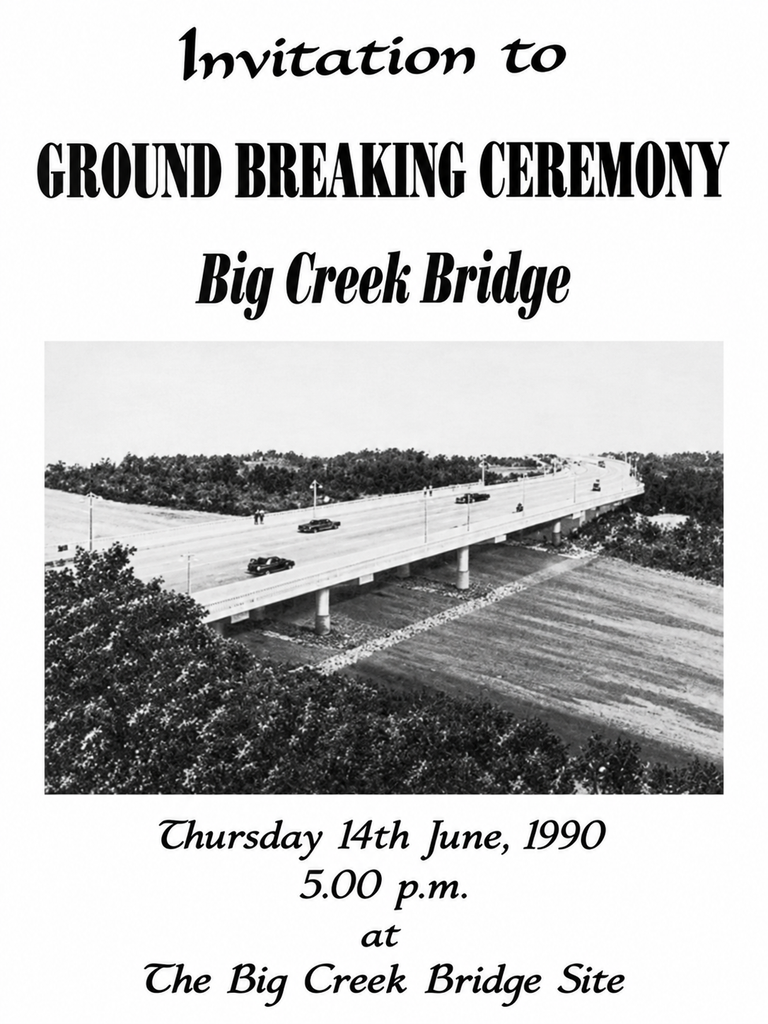
Opened in 1990, Big Creek Bridge was constructed with a zero-interest loan from the People’s Republic of China. It provided an important link across a waterway in western Antigua and was the first cooperation project between Antigua and Barbuda and China following the establishment of diplomatic relations in 1983.
APUA PCS – 2000
On 25 January 2000, APUA launched APUA PCS, its digital GSM mobile telephone service. APUA PCS billed Antigua and Barbuda as the first country in the English-speaking Caribbean to introduce GSM mobile service, marking a new chapter in local telecommunications.
Finance, Culture, and Achievement
Penny Bank – 1955
The Antigua Co-operative Bank Limited (now ACB Caribbean) was incorporated on 20 October 1955 and became known as Penny Bank. It was the country’s first indigenous financial institution and public company. Its early savings arrangements allowed people to open accounts with as little as a penny, making banking more accessible. Operations began on 3 January 1956.
The Sweetest Mango – 2001
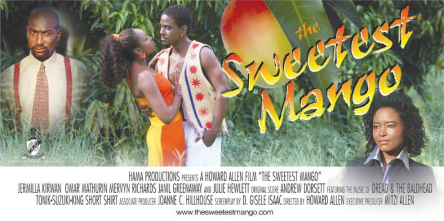
Released in February 2001, The Sweetest Mango was Antigua and Barbuda’s first locally produced feature film and the first indigenous film from the Eastern Caribbean. Directed by Howard Allen and produced by Howard and Mitzi Allen, the romantic comedy drew on the couple’s own story of meeting and falling in love.
(c) HAMA Productions
Team Wadadli – 2016
On 10 February 2016, Team Wadadli completed its Atlantic crossing from La Gomera to Antigua aboard Wa’Omoni, finishing in 52 days, 9 hours, and 9 minutes. The four-man crew comprising Dr. Nick Fuller, Archie Bailey, John Hall, and its oldest member, 74-year-old Peter Smith also established a Guinness World Record as the oldest team of four to row across any ocean.
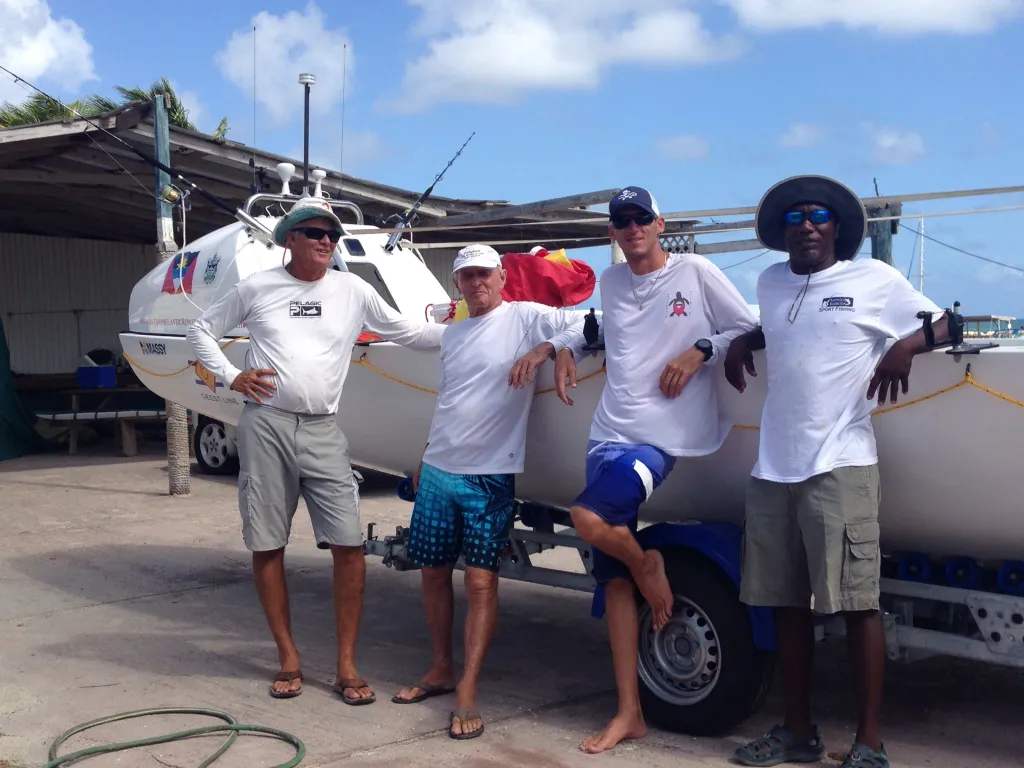
Source: https://www.antiguaatlanticrowers.com/crew/
Island Girls – 2019
On 28 January 2019, four members of Team Antigua Island Girls, Kevinia Francis, Elvira Bell, Christal Clashing and Samara Emmanuel, rowed into Nelson’s Dockyard after completing the Talisker Whisky Atlantic Challenge from La Gomera. Their crossing of approximately 3,000 nautical miles took 47 days, 8 hours and 25 minutes. They became the first all-Black team to row across the Atlantic and the first all-female Caribbean team to complete the challenge.
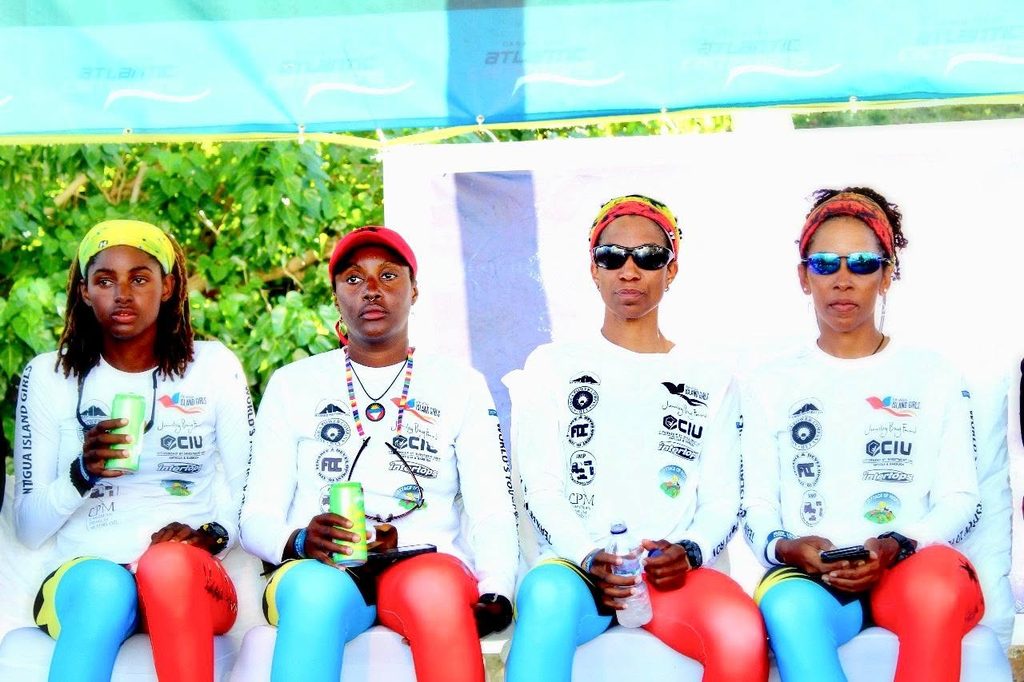
Source: Office of the Prime Minister Antigua and Barbuda Facebook Page


Leave a Reply